


Nutrition Month: How What You Eat Impacts Your Skin
When we talk about skin health, most people immediately think about skincare products.
Serums. Moisturizers. Treatments. SPF.
But your skin doesn’t just respond to what you apply topically. It reflects what’s happening internally.
March is Nutrition Month, and it’s the perfect time to talk about something we emphasize often at Ageless Living Cold Lake:
Healthy skin is built from the inside out.
Let’s break down how nutrition affects your skin, what nutrients truly matter, and how small changes can support long-term skin health.
Your Skin Is a Living Organ

Your skin is your body’s largest organ.
It protects you from environmental damage, regulates temperature, supports immune function, and acts as a barrier between you and the outside world.
To do all of that effectively, it requires:
- Protein
- Healthy fats
- Vitamins
- Minerals
- Hydration
When the body is depleted, stressed, or inflamed, your skin often shows it first.
Collagen Starts With Protein
Collagen is the structural protein that gives skin firmness and elasticity.
But collagen production depends on adequate protein intake.
Without enough dietary protein, your body prioritizes essential functions first, and collagen production can decline.
Protein-rich foods help support:
- Skin structure
- Wound healing
- Cellular repair
This becomes increasingly important as we age, since natural collagen production gradually decreases over time.
Healthy Fats Help Your Skin Barrier
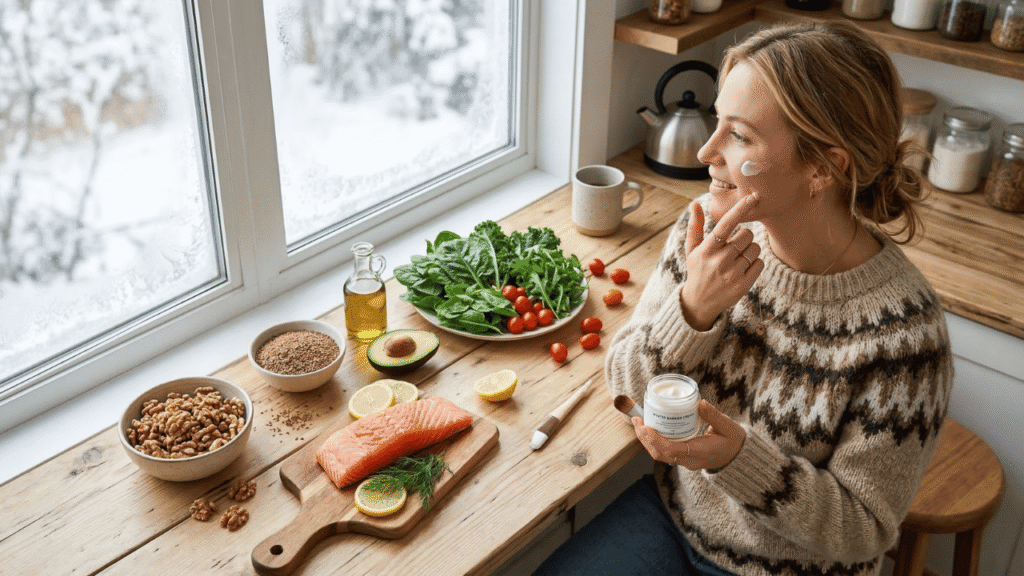
The skin barrier is what keeps moisture in and irritants out.
Cold Lake winters can be especially harsh on the skin barrier due to low humidity and indoor heating. Nutrition plays a role in how well that barrier functions.
Omega-3 fatty acids, found in foods like fatty fish, flaxseed, and walnuts, help support:
- Barrier strength
- Reduced inflammation
- Improved hydration retention
When the barrier is compromised, skin may feel tight, reactive, or dull.
Supporting it internally makes topical treatments more effective.
Antioxidants and Environmental Protection
Every day, your skin is exposed to:
- UV radiation
- Pollution
- Stress
- Environmental toxins
These exposures create oxidative stress, which accelerates aging and inflammation.
Antioxidant-rich foods help neutralize free radicals and support cellular health.
Key nutrients include:
- Vitamin C
- Vitamin E
- Beta-carotene
- Polyphenols
While topical antioxidants are essential, internal antioxidant intake adds another layer of protection.
Think of it as protection from both directions.
Sugar, Inflammation, and Skin Aging
High sugar intake can contribute to a process called glycation.
Glycation damages collagen and elastin, making them stiffer and less flexible. Over time, this may contribute to:
- Fine lines
- Loss of elasticity
- Dullness
This doesn’t mean eliminating all sugar.
It means being mindful of how consistently high sugar intake can impact long-term skin quality.
Balance matters.
Hydration Is More Than Drinking Water
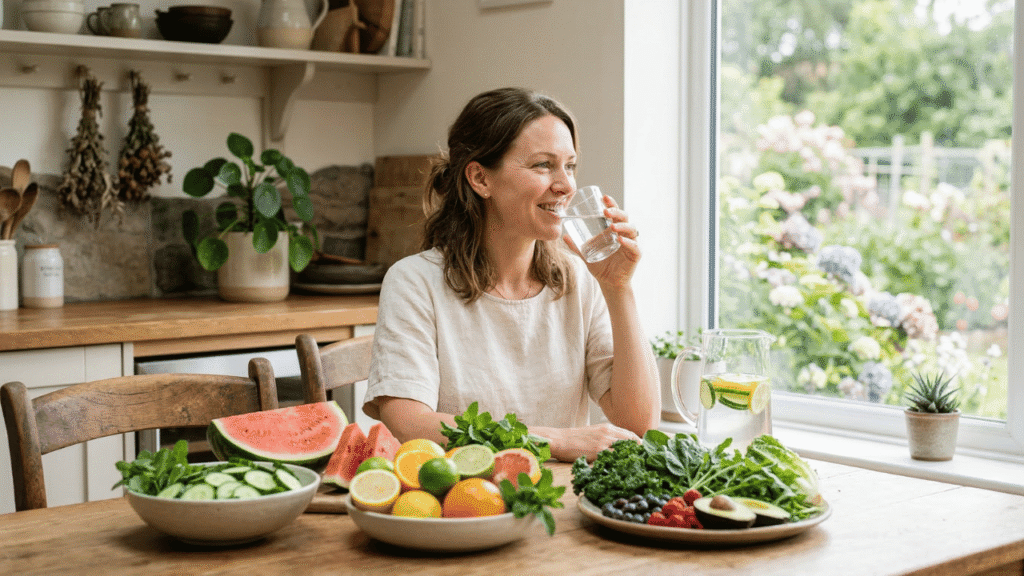
We often say “drink more water,” but hydration is about more than that.
True skin hydration depends on:
- Fluid intake
- Electrolyte balance
- Healthy fats
- A strong skin barrier
Topical hydrators and medical-grade skincare (like AlumierMD formulations) help lock in moisture, but internal hydration supports circulation and cellular function.
The combination creates visible results.
Nutrition + Treatments: Why Both Matter
Aesthetic treatments work best when the body is supported internally.
Collagen-stimulating treatments such as microneedling, laser, or radiofrequency rely on your body’s ability to repair and rebuild.
That repair process requires nutrients.
When internal health is supported, treatments can:
- Heal more predictably
- Produce stronger collagen response
- Deliver more noticeable results
It’s not either/or.
It’s a partnership.
Cold Lake Seasonal Considerations

During long winters, it’s common to see:
- Reduced fresh food variety
- Lower vitamin D levels
- Increased comfort food intake
This is normal.
But as spring approaches, it’s an ideal time to refocus on:
- Balanced meals
- Increased protein
- More colourful fruits and vegetables
- Consistent hydration
Small shifts now support brighter, healthier-looking skin heading into summer.
The Empowerment Piece
Nutrition conversations should never feel restrictive or guilt-driven.
This isn’t about perfection.
It’s about awareness.
Understanding how your choices affect your skin allows you to make informed decisions, not reactive ones.
Aging is not something to “fight.” It’s something to support thoughtfully.
And that support begins both internally and externally.
Where to Start
If you’re unsure where to begin, focus on:
- Prioritizing protein at meals
- Adding one antioxidant-rich food daily
- Supporting hydration consistently
- Pairing internal care with professional skincare guidance
Small, repeatable habits create lasting change.
Skin Health Is Whole-Body Health

The healthiest skin isn’t built through one product or one treatment.
It’s built through:
- Consistent skincare
- Strategic treatments
- Balanced nutrition
- Protective habits
This Nutrition Month, consider your skin part of your overall wellness strategy.
Because when you nourish your body, your skin responds.
And confident skin starts long before you look in the mirror.